

Want a $0 down payment home loan? The USDA home loan map decides if you qualify—and some areas might surprise you!
1: What’s a USDA Home Loan? (And Why the Map Matters)
“You don’t need to live on a farm to get a USDA home loan—check the USDA home loan map, and you might discover your suburban neighborhood already qualifies for a $0 down payment mortgage!”
Most people assume USDA loans are only for rural areas with sprawling farmland. But here’s the truth: Tons of suburban neighborhoods and small towns qualify too. The secret? It all comes down to the USDA home loan map—a little-known tool that decides whether your dream home is eligible for one of the most affordable mortgages out there.
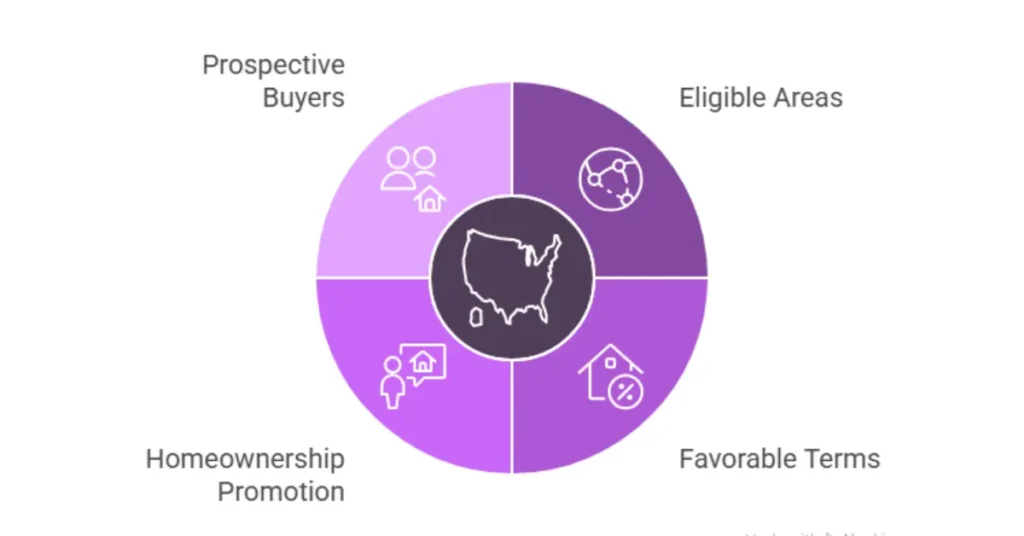
What Exactly Is a USDA Home Loan?
A USDA home loan is a government-backed mortgage designed to help low-to-moderate income buyers purchase homes in eligible rural and suburban areas. The biggest perk? You can buy a house with $0 down payment—something even FHA loans can’t beat.
There are two main types of USDA loans:
- USDA Guaranteed Loans – The most common option, backed by the USDA but issued by approved lenders.
- USDA Direct Loans – For very low-income buyers, directly funded by the government.
Why the USDA Home Loan Map Is a Game-Changer
The USDA eligibility map is what separates a “yes” from a “no” on your home loan application. Here’s why it matters:
- 97% of U.S. land is technically “rural”—but the map decides which areas actually qualify.
- Eligibility isn’t just about farms. Many suburbs near big cities (like parts of Houston, TX, or Orlando, FL) make the cut.
- The map updates yearly. A “no” this year could turn into a “yes” next December.
Who Should Care About This Map?
- First-time homebuyers (no down payment = easier entry)
- Families with moderate incomes (USDA loans have flexible limits)
- Buyers tired of competing in hot markets (USDA areas = less competition)
Pro Tip: Even if you think your area is too developed, check the map anyway. You might be surprised!
2: How to Check the USDA Map (Step-by-Step)
“Checking the USDA home loan map takes 30 seconds—but most people never even try because they assume they won’t qualify. Big mistake!”
You don’t need to guess or ask a realtor. The USDA has an official online tool that instantly tells you if your dream home is in an eligible zone. Here’s exactly how to use it.
1st Step: Find the Official USDA Eligibility Site
- Go to the USDA Property Eligibility Tool (direct link).
- Avoid third-party sites—they often charge fees or give outdated info.
2nd Step: Enter Your Address (Or a Potential One)
- Type in the exact address you’re interested in.
- If you’re just browsing, enter a city or ZIP code to see general eligibility.
3rd Step: Look for the Green Light
- “Eligible” = You’re good to go!
- “Ineligible” = Try nearby areas—sometimes moving 10-15 minutes away changes everything.
What If Your Area Is Borderline?
- Zoom out on the map. Whole counties sometimes qualify even if your exact block doesn’t.
- Call a USDA-approved lender. They know loopholes (like “spot approval” exceptions).
Pro Tip: Bookmark the map! USDA updates it every December, and your “no” could turn into a “yes” next year.
Read more about: The 5 Dirty Secrets VA Loan Calculators Don’t Tell You
3: 5 Surprising Areas That Might Qualify for USDA Loans
“Think USDA Loans Are Only for the Middle of Nowhere? Think Again!”
Most homebuyers picture rolling farmland when they hear “USDA eligible.” But here’s the eye-opener: plenty of desirable locations make the cut. The USDA’s definition of “rural” is way broader than you’d expect, and some of these areas are perfect for commuters, families, and even vacation home buyers.
Let me show you 5 unexpected places that often qualify:
1. Suburbs Near Major Cities
- The outskirts of cities like Nashville, Austin, and Orlando often qualify
- Example: Parts of Round Rock (near Austin) are USDA-eligible
- Perfect for commuters who want affordable housing near job centers
2. Small Towns with ‘Rural’ ZIP Codes
- Many towns 30-45 minutes from metro areas qualify
- Often have great schools and lower crime rates
- Pro tip: Check towns along highway corridors leading into cities
3. Vacation Hotspots
- Surprise! Parts of the Florida Keys qualify
- Some lake communities and mountain towns are eligible
- Great for second homes or relocation destinations
4. Areas Near Military Bases
- The USDA often extends eligibility near bases
- Helps service members and civilian employees
- Check around bases like Fort Hood or Camp Lejeune
5. ‘Spot Approval’ Pockets
- Some specific neighborhoods qualify even if the county doesn’t
- Happens in areas transitioning from rural to suburban
- Your lender can help identify these hidden gems
Key Takeaway
Never assume you don’t qualify based on location alone. I’ve seen buyers get USDA loans in neighborhoods with Starbucks down the street! The only way to know for sure? Check that USDA map we talked about earlier.
4: USDA Loan Myths – Busted!
“Think You Need to Be a Farmer With Perfect Credit? Think Again!”
There’s so much misinformation floating around about USDA loans that many qualified buyers never even apply. As someone who’s helped dozens of clients use this program, let me set the record straight on the biggest myths holding people back from this amazing homebuying opportunity.
Myth #1: “Only Farmers Can Qualify”
Reality Check:
- Teachers, nurses, retail workers – anyone can qualify if they meet income limits
- The property needs to be in an eligible area, but your job doesn’t matter
- Even remote tech workers and office professionals qualify!
Myth #2: “You Need Perfect Credit”
The Truth:
- 620 FICO score is the minimum requirement
- Some lenders go down to 580 with strong compensating factors
- Much more flexible than conventional loan requirements
Myth #3: “Income Limits Are Too Low”
Actual Facts:
- Limits vary by location and family size
- A family of 4 can make up to $110,650 in many areas
- Higher limits in places with higher costs of living
Myth #4: “You Can Only Buy Fixer-Uppers”
What’s Really Possible:
- You can buy move-in ready homes
- Must meet basic safety standards (like any mortgage)
- Can even include brand new constructions
Myth #5: “The Process Takes Forever”
Current Timeline Reality:
- USDA loans now close in 30-45 days
- Delays usually come from appraisal backups
- Working with an experienced USDA lender speeds things up
Pro Tip: Don’t Disqualify Yourself!
The biggest mistake I see? People ruling themselves out before even checking. The USDA program has helped:
- Single parents
- Veterans
- Young couples
- And many others
Don’t let these myths keep you from exploring this option – you might be the perfect candidate!
5: What If Your Area Isn’t Eligible? (Plan B Options That Work)
“Don’t Give Up Yet – 4 Smart Ways Around USDA Eligibility Rules”
Just found out your dream home isn’t in a USDA-eligible zone? Before you cancel your home search, take a deep breath. I’ve helped dozens of buyers in this exact situation find great alternatives – often with similar low-down-payment benefits. Here are your best options.
Option 1: Wait for the Annual Map Update
Why This Works:
- The USDA refreshes their eligibility map every December
- Areas transitioning from rural to suburban sometimes get grandfathered in for another year
- Pro Tip: Set a calendar reminder for November to check the new boundaries
Option 2: Expand Your Search Radius
The 15-Minute Solution:
- Move your search just 10-15 minutes further out
- Real Example: If Tampa’s core is ineligible, try Plant City or Lakeland
- Often finds similar homes at lower prices with USDA benefits
Option 3: Consider FHA Loans
The Next Best Thing:
- Only requires 3.5% down payment (vs USDA’s 0%)
- More flexible on location than USDA
- Similar low credit requirements (580+ score)
Option 4: Ask About Spot Approvals
The Hidden Loophole:
- Some lenders can request exceptions for specific properties
- Works best for areas right on the eligibility border
- Requires extra paperwork but can be worth the effort
Bonus Tip: Think Outside the ZIP Code
If you’re set on a particular ineligible area:
- Ask your realtor about “USDA-eligible neighborhoods nearby with similar amenities”
- You might find a better deal in the next town over
- Often discover hidden gem communities you hadn’t considered
Bonus Tip: If you’re set on a particular ineligible area, ask your realtor about “USDA-eligible neighborhoods nearby with similar amenities.” You might find a better deal in the next town over.
6: How to Apply for a USDA Loan (Without the Headache)
“USDA Loans Are Easier Than You Think – Here’s Your Stress-Free Guide”
Think applying for a USDA loan is complicated? Here’s a little secret: it’s often simpler than conventional mortgages when you know the right steps. After helping dozens of buyers through the process, I’ve created this foolproof roadmap to get you from application to closing with minimal stress.
Step 1: Find the Right Lender (This Changes Everything)
Why It Matters:
- Not all banks offer USDA loans – you need a USDA-approved lender
- Look for lenders with specific USDA experience (ask how many they’ve closed this year)
- Pro Tip: Local credit unions often have the best rates and service for USDA loans
Step 2: Get Pre-Approved First (Don’t Skip This!)
The Smart Approach:
- Soft credit check won’t affect your score
- Shows sellers you’re a serious buyer (crucial in competitive markets)
- Locks in your interest rate early (protects you if rates rise)
Step 3: House Hunt Strategically (Save Time & Heartache)
USDA-Specific Tips:
- Only look at homes in USDA-eligible “green zones”
- Ask your realtor to set up USDA-only search filters
- Avoid the trap of falling for an ineligible property
Step 4: Prepare for the USDA Appraisal
What Makes It Different:
- More thorough than conventional appraisals
- Focuses on safety requirements (working utilities, no peeling paint, etc.)
- Timing Tip: Budget 2-3 weeks for this process
Step 5: Understand the Timeline (No Surprises)
Realistic Expectations:
- Average 45 days to close (longer than conventional loans)
- Start early to avoid rate lock expiration
- Summer months tend to have faster processing
Bonus: The USDA Streamline Refinance Secret
Future-Proof Your Mortgage:
- If rates drop later, you can refinance with minimal paperwork
- No new appraisal required in most cases
- Ask your lender about this option upfront
Pro Tip: Avoid These 3 Common Mistakes
- Choosing an inexperienced lender (ask for USDA-specific references)
- Making big financial changes during the process (no new credit cards or loans!)
- Not verifying eligibility for your exact property address
7: The USDA Loan Final Checklist – Don’t Apply Until You Read This!
“One Missing Item = Delays or Denial: Here’s Your Complete USDA Checklist”
Think you’re ready to apply? Pump the brakes! After helping hundreds of homebuyers, I’ve seen too many applications get derailed by simple oversights. This no-nonsense checklist covers every box you need to check before hitting “submit” on your USDA loan application.
📍 Step 1: Verify Your Address (Again!)
Why This Matters:
- USDA maps update regularly – your “eligible” property might have changed status
- Lenders won’t proceed without current eligibility confirmation
- Pro Tip for New Construction: Builder lots need separate approval – don’t assume!
💰 Step 2: Crunch Your Income Numbers
What You Need to Know:
- Income limits vary by state and family size (e.g., $110,650 for family of 4 in Texas)
- They count ALL income: wages, bonuses, child support, even some rental income
- Smart Move: If near the limit, ask about allowable deductions (retirement contributions, etc.)
💳 Step 3: Check Credit & Debt Status
The Must-Haves:
- Minimum 620 FICO (some lenders accept 580 with strong factors)
- Debt-to-Income ratio under 41% (pay down cards if needed)
- Critical Warning: No new credit applications during the process!
🏦 Step 4: Choose Your Lender Wisely
Lender Red Flags to Avoid:
- “We do all types of loans” (you want USDA specialists)
- Can’t provide recent USDA loan examples
- Golden Question: “How many USDA loans did you close last month?”
📂 Step 5: Paperwork Prep (Don’t Wait!)
Document Checklist:
- 2 years tax returns + W-2s
- 30 days pay stubs
- 2 months bank statements
- Rental history (if applicable)
- Tech Tip: Create digital scans – most lenders use online portals
📝 Step 6: Get Pre-Approved First
Why It’s Essential:
- Shows sellers you’re serious (critical in competitive markets)
- Locks your rate (protects against increases)
- Timing Tip: Do this BEFORE house hunting – USDA loans move slower
❌ Step 7: Avoid These Costly Mistakes
Common Pitfalls:
- Assuming all property types qualify (manufactured homes have extra rules)
- Changing jobs/finances mid-process (big no-no!)
- Forgetting to negotiate seller concessions (USDA allows this!)
🚀 Final Pro Tip: The 48-Hour Rule
Before submitting:
- Review this checklist again
- Have your lender double-check everything
- Then (and only then) hit “submit”